
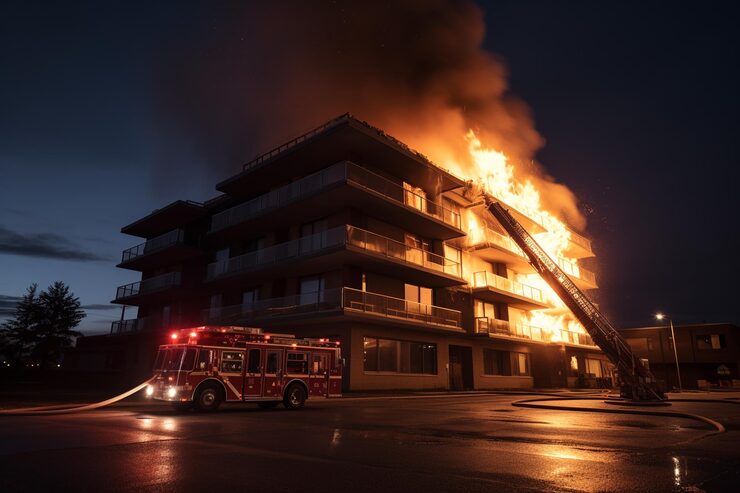
Fire code compliance for commercial buildings involves maintaining exits, life safety equipment, and fire protection systems, in addition to creating and practicing fire safety plans. Key requirements include keeping egress paths clear, ensuring fire doors function correctly, conducting regular inspections and maintenance for alarms, sprinklers, and extinguishers, and training staff on emergency procedures.
Life safety and egress
- Clear exits: All means of egress, including exit doors and hallways, must be free of obstructions.
- Emergency lighting: Emergency lighting systems must be installed and functional to provide light during a power outage.
- Fire doors: Fire doors must be correctly installed and have their automatic closing features working properly.
- Exit signs: Exit routes must be clearly marked with illuminated exit signs.
Fire protection systems
- Fire alarms: Fire alarm systems must be installed, operational, and inspected annually.
- Sprinkler systems: Sprinkler systems need annual inspection and testing.
- Fire extinguishers: Fire extinguishers must be inspected monthly, with a certified annual inspection and maintenance.
- Kitchen suppression: Commercial kitchen suppression systems require a six-month inspection.
- Smoke detectors: Smoke detectors should be operational and regularly tested.
Plans and training
- Fire safety plans: A fire safety plan is required for many buildings and must be reviewed annually by the local fire official. These plans outline evacuation routes, assembly points, and emergency procedures.
- Staff training: Employees must be trained on fire prevention and evacuation procedures.
- Fire drills: Regular fire drills should be conducted to ensure everyone knows what to do in an emergency.
Record keeping
- Maintain records: Keep records of all inspections, tests, and maintenance checks for at least two years.
- Fire department access: Maintain records at the building for inspection by the fire department upon request.