
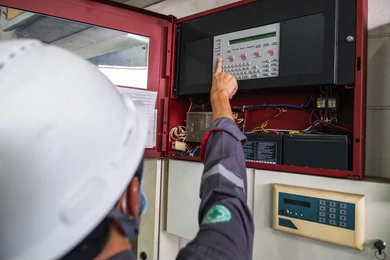
This practice prevents costly emergency repairs, minimizes false alarms, and extends the life of the system by identifying and fixing minor issues before they cause a failure.
Key benefits of regular maintenance
- Ensures system reliability: Regular checks, cleaning, and battery testing identify and fix small problems like dirty detectors or weak batteries, ensuring the system will work when needed most.
- Ensures code compliance: Maintenance helps meet legal requirements and safety standards set by authorities like the NFPA 72, avoiding potential fines and demonstrating a commitment to safety.
- Minimizes false alarms: Proactive maintenance addresses issues that can cause false alarms, such as sensor malfunctions or calibration problems, which saves money and maintains confidence in the system’s effectiveness.
- Extends system lifespan: Like any equipment, regular upkeep extends the life of your fire alarm system, which reduces the need for premature and expensive replacements.
- Reduces repair costs: Addressing minor issues during routine maintenance is less expensive than emergency repairs, which saves money in the long run.
- Enhances life safety: Ultimately, the primary importance of regular maintenance is to ensure the system’s readiness to provide early detection and notification, which is critical for saving lives during a real fire.